
Desserts
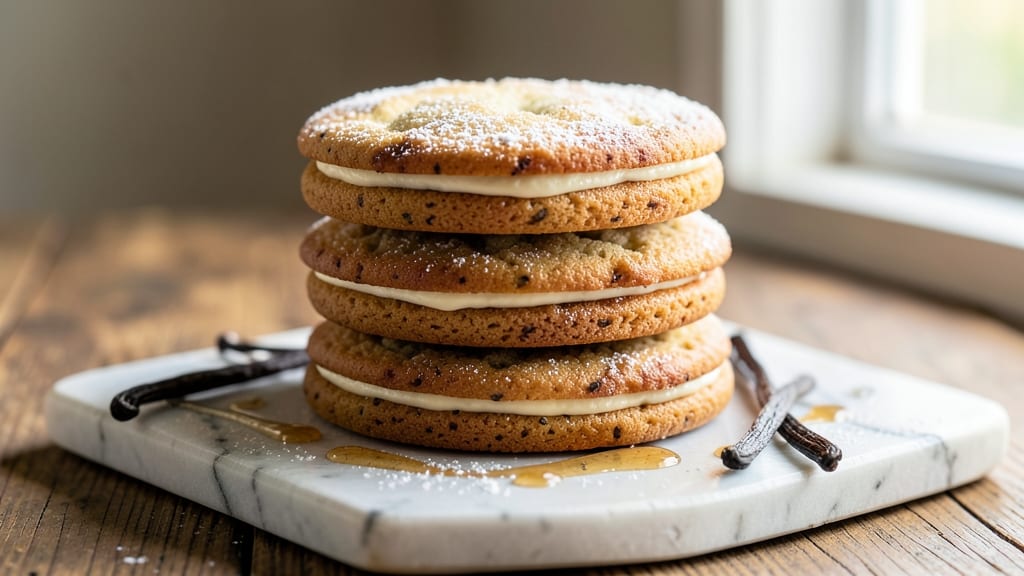
This filled cookies recipe delivers the perfect balance of crispy edges and gooey centers with every twisty bite. The secret lies in a foolproof dough technique paired with a rich vanilla-cream cheese filling that stays luscious even after baking.
I developed this recipe after years of testing—too many cookies ended up either dry or overly soft, until I cracked the right ratio of butter to flour and baking time.
The process starts with a simple vanilla dough that's rolled, filled with creamy vanilla-cream cheese mixture, then twisted into classic filled cookie shapes. Baking at 350°F for 10-12 minutes ensures the edges get crisp while the centers remain tender and filled with that signature gooey goodness.
The key is precise timing—underbake slightly for maximum filling effect.
What you'll end up with is a batch of restaurant-quality cookies that look impressive but are surprisingly easy to make. Each bite reveals layers of vanilla flavor from both the dough and filling, with the cream cheese adding just the right amount of tangy richness.
These cookies freeze beautifully for up to 3 months, making them perfect for holiday gifting.
For variations, swap the vanilla filling for chocolate ganache or fruit preserves, or add chocolate chips to the dough. The possibilities are endless while keeping the same foolproof technique. Let's get baking!
Ingredients for filled cookies
Twelve simple ingredients transform into restaurant-quality cookies with crisp edges and gooey centers.
| Ingredient | Amount | Notes |
|---|---|---|
| Unsalted Butter 🧈 | 1 cup | Cold, cubed for dough |
| Granulated Sugar 🍚 | ¾ cup | Superfine preferred for smoothness |
| Vanilla Extract 🍯 | 2 tsp | Pure, high-quality extract |
| All-Purpose Flour 🌾 | 2 ½ cups | Sifted for light texture |
| Salt 🧂 | ½ tsp | Fine sea salt preferred |
| Cream Cheese 🧀 | 8 oz | Full-fat, room temperature |
| Powdered Sugar 🍚 | ½ cup | For filling sweetness |
| Vanilla Bean Paste 🍯 | 1 tbsp | Or 1 tsp pure extract |
| Heavy Cream 🥛 | ¼ cup | Cold for filling stability |
| Powdered Sugar (extra) 🍚 | ¼ cup | For finishing sprinkle |
| Vanilla Bean Seeds 🌿 | ½ tsp | Scraped from 1 bean |
The butter and cream cheese are the foundation—use full-fat versions for optimal flavor and texture. For butter, Plugrá or Land O'Lakes unsalted work perfectly, but any high-quality brand will do. The cream cheese should be room temperature when mixing to avoid lumps—microwave it for 15 seconds if needed. Vanilla matters here: Madagascar bourbon vanilla extract or a scraped vanilla bean adds depth. Sift your flour to prevent dense cookies, and King Arthur or Gold Medal brands yield the best results. Skip the pre-sifted flour—it's already been aerated and won't give you that light texture.
No vanilla bean? Double the extract—just know it won't be as complex. Substituting powdered sugar for granulated in the filling works, but the texture becomes slightly grainier. For a tangy twist, swap half the powdered sugar for confectioners' sugar mixed with lemon zest. The heavy cream can be omitted if you prefer a firmer filling, but it adds luxurious richness. If you're baking for dietary reasons, substitute dairy-free butter and cream cheese (like Miyoko's or Kite Hill), though the texture will differ slightly. For the dough, if you don't have vanilla bean paste, 1 tsp pure extract plus 1/4 tsp vanilla bean seeds mimics the flavor.
Store baked cookies in an airtight container at room temperature for up to 5 days, though they're best enjoyed within 2 days for maximum gooeyness. For longer storage, freeze unbaked dough logs wrapped in plastic for up to 3 months—bake straight from frozen, adding 1-2 minutes to the time. The filling can be prepped ahead and chilled for up to 24 hours before assembly. To reheat, warm at 300°F for 5 minutes to restore that fresh-baked aroma. These cookies make stunning gifts—package them in clear cellophane bags tied with ribbon for a festive touch.
Why You'll Love This Recipe
- No-Fuss Dough: I swear, the dough comes together in three steps—cream butter and sugar, toss in vanilla, fold in flour. No mixer needed, no waiting for the oven to preheat forever. Just soft, buttery layers that hold filling like a dream.
- Vanilla Butter Magic: That first bite? Warm, gooey filling hugged by crisp edges—all thanks to the butter and sugar caramelizing just right. Honestly, the vanilla makes it taste like a bakery secret, not something I slapped together on a Tuesday.
- Filling Flexibility: Stuff them with jam, Nutella, or even mashed banana—whatever you’re craving. I’ve used leftover compote from dinner, and they still turned out ridiculously good. Perfect for using up pantry staples or impressing guests with zero extra effort.
- Budget Bites: Five ingredients, zero specialty items. The dough costs pennies, and the filling? Whatever’s in your fridge. Plus, they freeze like a champ—pull one out for a snack later, and it’s like it was just baked. My wallet and my taste buds win.
Step-by-step instructions for twisty vanilla-cream cheese filled cookies
Here's how to create perfectly balanced cookies with a tender exterior and luscious cream cheese filling.
Prepare the Cookie Dough
In a stand mixer fitted with the paddle attachment, combine the 1 cup cold, cubed unsalted butter and 0.75 cup granulated sugar. Beat on medium speed for 2-3 minutes until light and fluffy, scraping down the sides as needed. This step is crucial—it incorporates air that will create those signature crackly tops.
Add the 2 tsp vanilla extract and mix for 10 seconds until fully combined. In a separate bowl, whisk together the 2.5 cups all-purpose flour and 0.5 tsp salt. With the mixer running on low speed, gradually add the flour mixture to the butter-sugar mixture, mixing just until combined. The dough should hold together when pressed but not be sticky. Avoid overmixing, which can make the cookies tough.
Create the Cream Cheese Filling
In a separate bowl, beat the 8 oz room-temperature cream cheese until completely smooth, about 1 minute. Add the 0.5 cup powdered sugar and mix until fully incorporated. Stir in the 1 tbsp vanilla bean paste and 0.5 tsp vanilla bean seeds, scraping down the sides to ensure even distribution. The filling should be thick but pipeable.
In a small separate bowl, whip the 0.25 cup cold heavy cream until soft peaks form. Gently fold this into the cream cheese mixture until fully combined. This step ensures the filling stays stable during baking. Cover the bowl and refrigerate the filling while you prepare the dough for rolling.
Roll and Fill the Dough
Divide the dough into two equal portions and flatten each into a 6-inch circle on parchment-lined baking sheets. Using a rolling pin, roll each circle to about 1/8-inch thickness. Keep the dough chilled between rolls to prevent spreading. Cut each circle into 12 wedges, creating a total of 24 wedges.
Working quickly, pipe about 1 teaspoon of the cream cheese filling onto the wide end of each wedge. Fold the wedge in half to encase the filling completely, then twist the two halves together to form a spiral. Place the filled cookies on the prepared baking sheets, spacing them about 2 inches apart. The twisting creates that signature look while keeping the filling securely inside.
Bake to Golden Perfection
Preheat your oven to 350°F. Bake the cookies for 12-14 minutes, rotating the pans halfway through, until the edges are golden brown but the centers still appear slightly soft. They'll continue firming up as they cool. Watch closely during the last 2 minutes to prevent overbrowning.
Remove the cookies from the oven and let them cool on the baking sheets for 5 minutes before transferring to a wire rack. While still warm, dust the tops with the 0.25 cup extra powdered sugar using a fine-mesh sieve. This creates that beautiful snowy finish while the cookies are still slightly warm. The sugar will melt slightly, giving them that professional bakery look.
Pro Tips For Making Filled Cookies
- CHILL THE FILLING: I learned this the hard way—skip the warm filling. Let your jam, cream cheese, or chocolate ganache cool completely before piping it into the dough. Warm filling melts too fast, causing messy leaks during baking. (Yes, even if you're impatient like me.)
- WEIGH THE FLOUR: Stop eyeballing it. Flour is tricky—packed vs. scooped changes texture. Use a kitchen scale for the dough and any flour needed for dusting. A gram or two makes a difference in how tender or crumbly your cookies turn out.
- UNDERBAKE THE SHELLS: Take them out when the edges are just set but the centers still look soft. Filled cookies finish cooking from residual heat while the filling warms. Overbaked shells turn dry and crack under the filling’s weight.
- USE COLD BUTTER: No exceptions. Cut the butter into tiny cubes and refrigerate the dough for at least 30 minutes before rolling. Cold butter creates flaky layers that hold up to the filling’s weight. (I skip this when I’m lazy, but the dough sticks and spreads like a mess.)
Troubleshooting perfect results
Dough Too Sticky
If your dough feels too sticky when rolling, you likely added too much liquid or didn't chill it properly. First, check your butter—it should be cold but not frozen. If the dough still sticks, sprinkle your work surface with 1-2 tablespoons extra flour, but don't overdo it.
I recommend chilling the dough for 15-20 minutes between mixing and rolling to firm it up. For extra insurance, wrap the dough in plastic and refrigerate for 30 minutes before rolling. 🧂
Filling Leaks Out
Filling leaks when twisting? This usually means the dough isn't properly sealed around the filling. Make sure to press the edges firmly together when folding the wedges. Another trick is to pipe the filling slightly away from the edge of the dough wedge, then fold and twist quickly.
If the filling is too runny, add 1-2 tablespoons more powdered sugar to thicken it. I also recommend using a piping bag with a small round tip for cleaner application. 🥄
Cookies Spread Too Much
Over-spreading happens when the dough is too warm or the butter melts too quickly. Always use cold butter and keep your dough chilled until ready to roll. If your oven runs hot, reduce the temperature to 340°F and bake for 13-15 minutes.
For extra control, place the baking sheet on the middle rack and avoid opening the oven during the first 10 minutes of baking. 🔥
Filling Too Dry
A dry filling often means the cream cheese wasn't properly softened or the heavy cream wasn't whipped enough. Ensure your cream cheese is room temperature (not warm) before mixing. If the filling still seems too thick, add 1 tablespoon heavy cream and mix well.
For extra moisture, add ½ teaspoon lemon juice to the filling mixture. I also recommend letting the filling sit in the fridge for 10-15 minutes before piping to firm it up slightly. 🥛
Cookies Burn Before Cooking Through
This is a common issue with dark baking sheets or hot spots in your oven. Always use light-colored or parchment-lined baking sheets to reflect heat. Rotate the pans halfway through baking for even cooking.
If your oven has hot spots, consider using two baking sheets at once. For extra insurance, place a silicon baking mat on the sheet to prevent direct contact with the metal. 🌡️
Twists Fall Apart
If your twisted cookies unravel during baking, the dough might be too soft or the filling too heavy. Let the filled cookies rest on the baking sheet for 10 minutes before baking to help them hold their shape. For extra stability, gently press the twisted edges together with your fingers.
If the dough is too soft, chill it for 10 minutes before twisting. I also recommend using a slightly thicker dough (about 1/8-inch) for better structure. 💪
Nutrition facts
Frequently asked questions about filled cookies
What's the secret to keeping the filling gooey?
Bake just until the edges are golden (12-14 minutes at 350°F) and the centers still look soft. The filling will firm up as it cools, but leaving it slightly underbaked ensures that signature melt-in-your-mouth texture. Overbaking is the #1 reason for dry fillings!
Can I make these cookies without a stand mixer?
Use a hand mixer or even a sturdy wooden spoon to cream the butter and sugar until light and fluffy. For the dough, mix by hand until just combined—no need to overwork it. The key is still keeping everything cold and working quickly when rolling.
How do I store filled cookies to prevent soggy bottoms?
Let them cool completely, then store in an airtight container with parchment paper between layers. They'll stay fresh for 5 days at room temperature or 3 months frozen. For extra protection, add a small piece of bread or a paper towel to absorb any moisture.
What are some easy filling variations?
Swap the vanilla filling for chocolate ganache (melt 6 oz chocolate + 2 tbsp cream), lemon curd, or even jam. For nut lovers, mix 2 tbsp crushed pistachios into the cream cheese filling. Just adjust sweetness—some fillings like salted caramel need less sugar.
Why did my cookies crack open while baking?
This happens when the dough dries out too quickly or the filling expands unevenly. Try reducing the oven temperature to 340°F and adding 1 tbsp milk to the dough for extra moisture. Also ensure your filling isn't too runny—it should hold its shape when piped.