Desserts
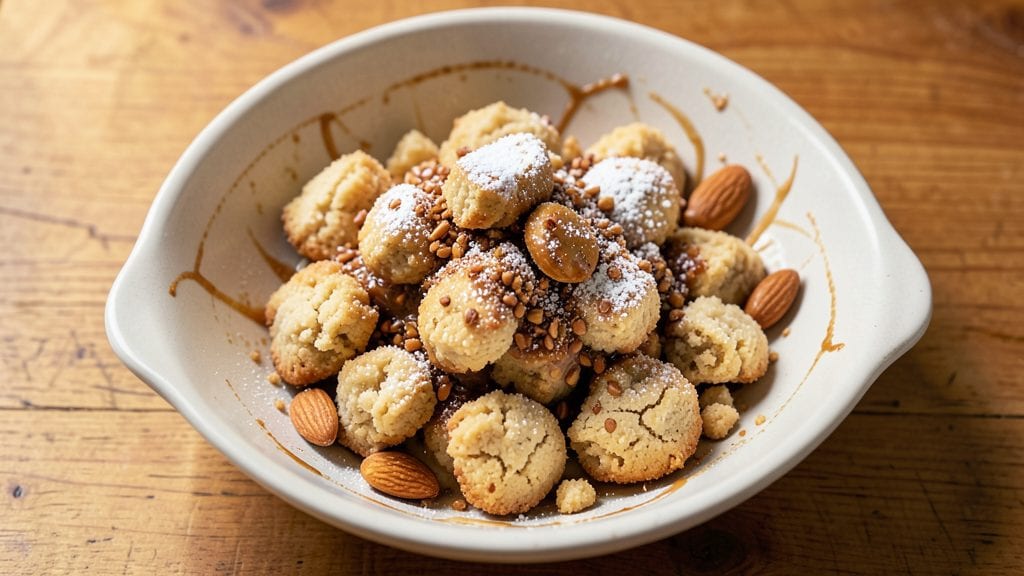
This Spanish cookie recipe delivers the perfect balance of buttery crunch and tender almond filling that makes them irresistible during holiday gatherings. The secret lies in precise ingredient ratios and careful baking—too much heat, and they’ll brown too quickly; too little, and they’ll stay doughy.
I’ve perfected this version after years of testing, ensuring every bite offers that satisfying contrast between crisp edges and soft, nutty centers.
Traditionally served during Christmas and New Year’s celebrations, these cookies are often dusted with powdered sugar or rolled in crushed nuts for extra texture.
The recipe requires just five key ingredients—flour, butter, sugar, almonds, and a touch of vanilla—along with a few simple steps that yield a batch of cookies ready in about 20 minutes. The almond filling is the star, providing a rich, slightly sweet contrast to the delicate cookie exterior.
What sets these apart is their ability to stay fresh for weeks when stored properly in an airtight container. The edges should be lightly golden, not browned, while the centers remain soft enough to hold the almond filling without crumbling.
This recipe is foolproof for beginners but delivers restaurant-quality results that will impress even seasoned bakers.
For added flair, try dipping half the cookies in melted chocolate before dusting with powdered sugar, or infuse the almond filling with a hint of citrus zest for a brighter twist.
Whether you’re gifting them or serving them at a festive table, these cookies bring a taste of Spain’s holiday traditions to your kitchen.
Ingredients for spanish cookie
Five core ingredients plus a few finishing touches create these iconic Spanish holiday cookies.
| Ingredient | Amount | Notes |
|---|---|---|
| All-Purpose Flour 🌾 | 4 cups | Sifted for light texture |
| Unsalted Butter 🧈 | 2 cups | Cold and cubed for even baking |
| Granulated Sugar 🍚 | 1 ½ cups | Superfine preferred for smoothness |
| Ground Almonds 🌰 | 2 cups | Finely ground for creamy filling |
| Pure Vanilla Extract 🌿 | 1 tbsp | High-quality for authentic flavor |
| Powdered Sugar 🍚 | ½ cup | For dusting finished cookies |
| Large Eggs 🥚 | 2 whole | Room temperature for even mixing |
| Salt 🧂 | ½ tsp | Fine sea salt for balance |
| Lemon Zest 🍋 | 1 tsp | Optional for bright citrus note |
| Almond Slices 🌰 | ¼ cup | For garnish (optional) |
| Dark Chocolate 🍫 | ½ cup | Melted for dipping variation |
The butter and flour form the delicate cookie exterior, so high-quality unsalted butter is essential—none of that margarine nonsense. King Arthur or Bob's Red Mill flour yield the best texture, but any all-purpose will work. For the almond filling, ground almonds from a bulk bin (like at Whole Foods) have superior texture compared to store-bought bags, which often contain fillers. If you're short on time, almond flour works in a pinch, though it's slightly denser. The vanilla should be pure—Nielsen-Massey or McCormick brands are reliable choices for consistent flavor.
No vanilla extract? Vanilla bean paste at half the amount delivers a similar depth. Substituting almonds? Hazelnuts or pecans work, but the flavor profile shifts noticeably. The lemon zest is optional but worth it for that bright, festive note—use organic lemons when possible for richer flavor. For the chocolate variation, 70% dark chocolate melts smoothly without overpowering the almond filling. Store-bought powdered sugar often contains cornstarch; Diamond Crystal is pure and dissolves beautifully for dusting.
These cookies stay fresh for 3-4 weeks in an airtight container with parchment between layers. For longer storage, freeze the unbaked dough balls for up to 3 months—bake straight from frozen, adding 2-3 minutes. The chocolate-dipped variation requires melted chocolate to set at room temperature before dusting with powdered sugar. If gifting, package in cellophane bags with ribbon for a professional touch. The almond filling can be pre-made and stored separately for 1 week in the fridge.
Why You'll Love This Recipe
- No Mixer Needed: I swear by this dough—just cream butter and sugar, then fold in flour and almonds. No electric mixer, no fuss, and the texture turns out buttery perfection every time.
- Vanilla-Almond Magic: That ground almonds and vanilla combo? It’s like a warm hug in cookie form. The almonds add crunch, the vanilla deepens the flavor, and together they make these taste like a bakery secret.
- Party in a Jar: Between us, these cookies freeze like champs. Bake a batch, store them, and pull them out for holidays, coffee dates, or when you really need a treat. No one will guess they’ve been sitting in your freezer.
- Budget-Friendly Luxury: Butter, sugar, flour—these are pantry staples. Ground almonds stretch the dough further than most, and a single batch feeds a crowd without breaking the bank. (Yes, even on a Tuesday night.)
Step-by-step instructions for Spanish cookies recipe: almond-filled delight with crunchy edges
Here's how to create these traditional Spanish cookies with a perfect balance of crispy edges and tender almond centers.
Prepare the Almond Filling
In a medium bowl, combine the 2 cups ground almonds, 1.5 cups granulated sugar, 1 tablespoon pure vanilla extract, and 0.5 teaspoon salt. Mix thoroughly until the mixture is completely homogeneous and resembles wet sand. The texture should be moist but not sticky—this ensures a smooth filling that won't dry out during baking.
If the mixture feels too dry, add 1 teaspoon lemon zest and mix again. The lemon zest adds brightness and helps bind the filling. Press the almond mixture into a 1-inch thick log shape on parchment paper, wrap it tightly, and refrigerate for 30 minutes. This chilling step prevents the filling from spreading too much when you roll it out later.
Create the Cookie Dough
In a large mixing bowl, combine the 4 cups all-purpose flour and 0.5 teaspoon salt. Sift the flour mixture to aerate it, which helps create light, tender cookies. Cut in the 2 cups unsalted butter using a pastry cutter or your fingers until the mixture resembles coarse crumbs with pea-sized butter pieces remaining.
In a separate bowl, beat the 2 whole large eggs until frothy. Gradually add the eggs to the flour mixture while mixing on low speed until just combined. The dough should hold together when pressed but not be sticky. If it feels too dry, add 1 tablespoon cold water at a time until it comes together. Wrap the dough in plastic wrap and refrigerate for 1 hour to firm up.
Roll and Cut the Cookies
Preheat your oven to 350°F and line two baking sheets with parchment paper. On a lightly floured surface, roll out the chilled dough to ¼-inch thickness. Use a 3-inch round cutter to cut out circles, gently re-rolling the scraps as needed. Place the dough circles on the prepared baking sheets, spacing them 1 inch apart for even baking.
Unwrap the chilled almond log and slice it into ½-inch thick rounds using a sharp knife. Place one almond round in the center of each dough circle. Press the edges of the dough gently around the almond filling to seal, creating a neat, round cookie with a filled center. Sprinkle the tops with 0.25 cup almond slices for garnish if desired.
Bake to Golden Perfection
Bake the cookies for 12-15 minutes until the edges are golden brown and the centers are set but still slightly soft. Rotate the baking sheets halfway through for even baking. The cookies should release easily from the parchment paper when done. Let them cool on the baking sheet for 5 minutes before transferring to a wire rack to cool completely.
For an optional variation, melt the 0.5 cup dark chocolate and drizzle it over the cooled cookies. Alternatively, dust the finished cookies with 0.5 cup powdered sugar for a sweet, snowy appearance. Store in an airtight container for up to 5 days or freeze for longer storage.
Pro Tips For Making Spanish Cookie
- Chill the Dough: DESCRIPTION: This isn’t just about convenience—it’s about texture. After mixing, let the dough rest in the fridge for at least 30 minutes (up to 24 hours if you’re patient). The almonds and butter need time to hydrate properly, or you’ll end up with dry, crumbly cookies that fall apart at the slightest touch. Trust me, the wait makes them chewier and more flavorful.
- Toast the Almonds: DESCRIPTION: Skip the raw ground almonds unless you’re okay with a bland, slightly bitter cookie. Lightly toast your ground almonds in a dry pan over medium heat for 3–4 minutes until they smell nutty and golden—just until they’re warm, not browned. This step deepens their flavor and prevents that "off" aftertaste that ruins the whole batch.
- Don’t Overbake: DESCRIPTION: These cookies are delicate. Pull them from the oven when the edges are just starting to turn golden (around 12–14 minutes at 350°F), not when they’re deep brown. Overbaking turns them dry and hard, and no one wants a cookie that could double as a doorstop. Use a timer and check early.
- Cream the Butter Cold: DESCRIPTION: Take your unsalted butter straight from the fridge—yes, even in summer—and beat it with the sugar until it’s light and fluffy but still holds its shape. If you let it get too soft, the cookies will spread too much and lose that signature tender crumb. Cold butter = better structure, every time.
Pro cooking tips for great spanish cookie
Butter Temperature Matters
Use cold cubed butter when cutting into the flour—never softened or melted. The tiny butter pieces should remain pea-sized in the dough for even baking and that signature crisp edge. I recommend pulling your butter straight from the fridge and cutting it into ½-inch cubes before mixing.
If your kitchen is warm, chill the dough for an extra 15 minutes before rolling. 🧈
Almond Filling Texture
The almond mixture should resemble wet sand when mixed—not sticky, not dry. If it crumbles, add 1 teaspoon lemon juice to bind it. Press the log firmly into the parchment to prevent cracking when sliced.
For extra smoothness, pulse the ground almonds in a food processor for 10 seconds before mixing with sugar. This removes any lumps that can make the filling grainy. 🌰
Dough Chilling is Key
Never skip the 1-hour dough chill—this prevents spreading and ensures clean cuts. Wrap the dough tightly in plastic wrap to maintain shape. If you're short on time, freeze the dough for 20 minutes instead, but let it sit at room temperature for 10 minutes before rolling to prevent cracking.
I use a 3-inch round cutter for consistent shapes, but a fluted pastry wheel adds decorative edges. ✨
Baking Time Precision
Bake at 350°F until edges are golden brown (not browned) with 5-7 minutes remaining in the bake time. The centers should still feel slightly soft when pressed gently. Overbaking dries out the almond filling—pull them out when they look just set.
I set a timer for 12 minutes and check at 11 minutes to avoid overcooking. 🌡️
Sealing the Filling
Press the dough edges firmly around the almond rounds to create a tight seal. This prevents filling from leaking during baking. For extra security, use a small offset spatula to gently press the edges.
If the filling oozes slightly, that's normal—just ensure the dough fully encases it before baking. The almond slices on top add texture but aren't necessary for structure. 💫
Cooling for Crispness
Let cookies cool on the baking sheet for 5 minutes before transferring—they'll crisp up as they cool. For chocolate-dipped variations, wait until completely cool (about 30 minutes) before dipping to prevent melting. Store in a single layer in an airtight container with parchment between layers to maintain crispness. 💡
Nutrition facts
Frequently asked questions
What makes these Spanish cookies different from regular almond cookies?
These cookies feature a delicate, buttery exterior with a rich almond filling that's pressed into the center—unlike regular almond cookies where nuts are mixed throughout. The Spanish technique creates a crisp edge with a soft, nutty center that's perfect for holiday gifting. The dough is also chilled and rolled thin for that signature texture.
Can I make these cookies without ground almonds?
Yes! You can substitute with 2 cups almond flour (though texture will be slightly denser) or 1.5 cups finely chopped toasted almonds mixed with 0.5 cup powdered sugar. For a different flavor, try hazelnuts or pecans, but the almond filling is traditional for an authentic taste.
Why did my cookies turn out flat instead of round?
Flat cookies usually result from skipping the 1-hour dough chill or using warm butter. Always use cold cubed butter and refrigerate the dough. If your kitchen is warm, chill the dough for an extra 15 minutes before rolling. Also ensure your oven is fully preheated to 350°F before baking.
How can I store these cookies to keep them fresh?
Store in an airtight container with parchment paper between layers to maintain crispness. They'll stay fresh for 3-4 weeks at room temperature. For longer storage, freeze the unbaked dough balls for up to 3 months—bake straight from frozen, adding 2-3 minutes to the baking time.
Can I make these gluten-free?
Yes! Replace the all-purpose flour with a 1:1 gluten-free baking flour blend (like Bob's Red Mill). For best results, add 1 teaspoon xanthan gum to help bind the dough. The texture will be slightly different but still delicious. Test with a small batch first to adjust ratios.