
Desserts
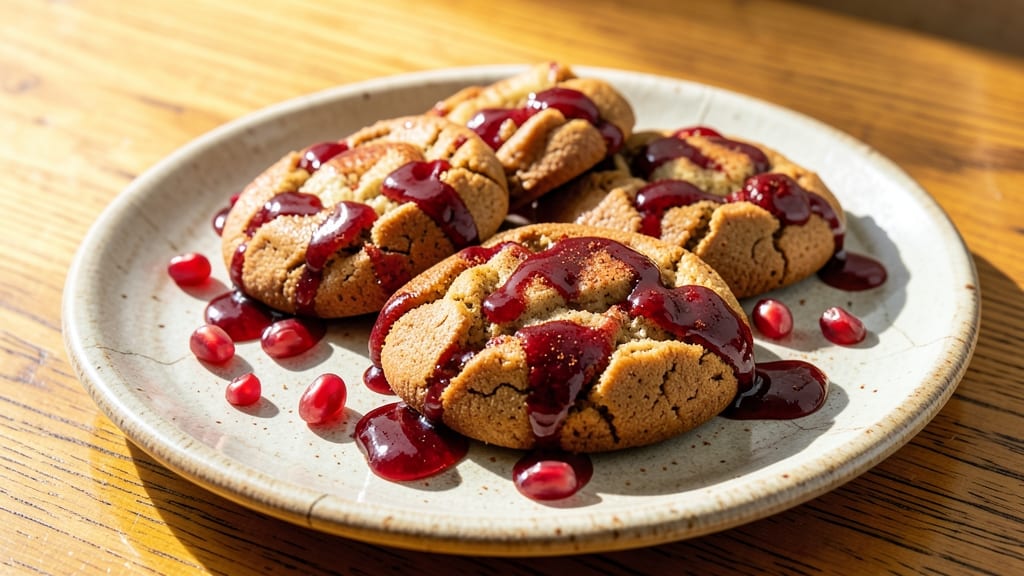
This pomegranate cookie recipe transforms ordinary baking into a jewel-toned masterpiece that balances tart, sweet, and crunchy textures in every bite. The secret lies in using pomegranate molasses for depth and fresh seeds for that signature ruby crunch—no artificial colors here.
I developed this recipe after years of experimenting with Middle Eastern-inspired cookies, and it's now my go-to for holiday baking or unexpected cravings.
The dough comes together with just 7 ingredients, including butter, brown sugar, and a touch of cinnamon for warmth. What sets these apart is the pomegranate molasses, which adds a complex tartness that cuts through the sweetness, while fresh seeds provide that satisfying crunch.
Baking time is precise—10-12 minutes—to ensure a tender center with just enough structure to hold the seeds.
By the time you pull them from the oven, you'll have cookies with a golden-brown edge and a glossy sheen from the molasses. The aroma alone—warm spices and fruit—will fill your kitchen, and the first bite delivers that perfect balance of sweet, tart, and crunchy.
These aren't just cookies; they're edible art that tastes even better the next day.
Pair them with a cup of chai or serve as a festive dessert, but be warned: once you try them, store-bought won't compare. Let's get baking—your kitchen (and taste buds) will thank you.
Ingredients for pomegranate cookie
Seven simple ingredients transform into jewel-toned cookies with tart-sweet crunch.
| Ingredient | Amount | Notes |
|---|---|---|
| Unsalted Butter 🧈 | ½ cup | Cold, cubed for texture |
| Light Brown Sugar 🍚 | ¾ cup | Packed firmly for sweetness |
| Large Eggs 🥚 | 1 whole | Room temperature for blending |
| Vanilla Extract 🍯 | 1 tsp | Pure, not imitation |
| Ground Cinnamon 🌿 | ½ tsp | Freshly ground preferred |
| Pomegranate Molasses 🍇 | ¼ cup | Thick, not syrup substitute |
| All-Purpose Flour 🌾 | 1 ½ cups | Sifted for light texture |
| Fresh Pomegranate Seeds 🍓 | ½ cup | Ruby seeds, not arils |
| Sea Salt 🧂 | ¼ tsp | Fine grain for balance |
| Baking Soda 🍞 | ¼ tsp | Freshly measured |
The pomegranate molasses is non-negotiable—Middle Eastern markets or specialty stores carry the best, but Penzeys online has a great selection if you can't find it locally. Look for the thick, syrupy kind (not the thin, watery stuff). Fresh pomegranate seeds? Trader Joe's sells them pre-seeded in the fall, or buy a whole pomegranate and crack it open yourself—it's worth the mess for that vibrant color. The butter should be cold but not rock-hard; let it sit at room temp for 30 minutes if it's straight from the fridge. For the brown sugar, pack it firmly into the cup—don't scoop and level, or you'll lose sweetness.
No pomegranate molasses? Substitute with 2 tbsp grenadine syrup plus 1 tbsp lemon juice, but the flavor won't be identical. Fresh seeds unavailable? Dried cranberries or chopped dried apricots add chewiness, though they won't give that ruby crunch. The cinnamon is key—Ceylon cinnamon has a milder, sweeter note, but regular works fine. For extra warmth, add a pinch of cardamom (use half the amount of cinnamon). The dough will be sticky, so chill it for 30 minutes before scooping—trust me on this. If you're in a rush, freeze the dough balls for 15 minutes instead.
These cookies keep for 5 days in an airtight container at room temperature, but they're best enjoyed fresh. For longer storage, freeze the baked cookies (not dough) in a single layer, then transfer to a sealed bag for up to 3 months. The molasses adds moisture, so they won't dry out like regular cookies. Reheat at 300°F for 5 minutes to revive the crunch. I always double the batch—they disappear fast, especially when paired with chai or vanilla ice cream.
Why You'll Love This Recipe
- These work for anything: a last-minute gift box, a cozy afternoon tea, or a "I need sugar NOW" emergency. I’ve wrapped them in cellophane for parties, tossed them in lunchboxes, and even crumbled them over yogurt—versatile enough to handle your mood.
- No-Fuss Mixing: I swear by this dough—just cream butter and sugar, add eggs one at a time, and fold in the cinnamon. No food processor, no overworking, just three minutes of hands-on time before the pomegranate seeds pop in for that jewel-toned surprise.
- Sweet-Spiced Magic: That brown sugar caramelizes into a deep, buttery crunch while the cinnamon adds warmth. The vanilla ties it all together, but honestly? The tart pomegranate seeds are the real star—bursting in every bite like a tiny, edible celebration.
- Holiday or Snack Attack: These work for anything: a last-minute gift box, a cozy afternoon tea, or a "I need sugar NOW" emergency. I’ve wrapped them in cellophane for parties, tossed them in lunchboxes, and even crumbled them over yogurt—versatile enough to handle your mood.
Step-by-step instructions for pomegranate cookies recipe
Let's create these vibrant cookies with a perfect balance of tart pomegranate and buttery sweetness.
Cream the Butter and Sugar for Maximum Fluffiness
In a stand mixer fitted with the paddle attachment, combine the 0.5 cup unsalted butter (cold, cubed) and 0.75 cup light brown sugar (packed firmly). Beat on medium speed until light and fluffy, about 3-4 minutes. You'll see the mixture nearly double in volume and turn pale yellow—this incorporates air for that perfect cookie texture.
Here's the thing—don't rush this step. The butter should be completely smooth with no graininess remaining. If you skip this, your cookies will be dense instead of chewy. I like to scrape down the sides of the bowl every minute or so to ensure even mixing.
Incorporate Wet Ingredients and Pomegranate Molasses
Add the 1 whole large egg (room temperature) and 1 tsp vanilla extract to the butter mixture. Beat on low speed until fully combined, about 30 seconds. Then stir in the 0.25 cup pomegranate molasses using a rubber spatula—this adds that signature tart depth.
Next, whisk together 1.5 cups all-purpose flour, 0.5 tsp ground cinnamon, 0.25 tsp sea salt, and 0.25 tsp baking soda in a separate bowl. Gradually add the dry ingredients to the wet mixture, mixing on low speed just until combined. You'll still see some flour streaks—that's normal and prevents tough cookies.
Fold in Pomegranate Seeds for Ruby Jewels
Using a silicone spatula, gently fold in the 0.5 cup fresh pomegranate seeds (ruby seeds, not arils). Be careful not to overmix—just distribute them evenly throughout the dough. The seeds add beautiful pops of color and a delightful crunch that contrasts perfectly with the soft cookie texture.
I know it seems like too much, but trust me—the seeds don't overpower the cookie. If you're worried, you can start with half and add more later. The dough will be slightly sticky, but that's normal given the molasses and seeds.
Chill the Dough for Perfect Texture
Divide the dough into two equal portions and flatten each into a disc about 1-inch thick. Wrap each disc tightly in plastic wrap and refrigerate for at least 1 hour (or up to 24 hours). This chilling step is crucial—it prevents the cookies from spreading too much in the oven and helps develop the best texture.
While the dough chills, preheat your oven to 350°F and line two baking sheets with parchment paper. The cold dough will make it easier to handle when you're ready to shape the cookies. Pro tip: If you're in a hurry, you can chill the dough for 30 minutes in the freezer instead.
Bake to Golden Perfection with Ruby Centers
Once chilled, roll the dough discs into 1-inch balls (about 1 tablespoon each) and place them 2 inches apart on the prepared baking sheets. Flatten each ball slightly with your palm to create a ½-inch thick cookie. Bake for 10-12 minutes until the edges are golden brown but the centers still look slightly soft.
Real talk: Don't overbake these cookies or they'll lose their chewy texture. They should be set around the edges but still have a soft, slightly gooey center when you press gently. Let them cool on the baking sheet for 5 minutes before transferring to a wire rack to set completely. Enjoy them warm for the ultimate experience!
Pro Tips For Making Pomegranate Cookie
- Cream Butter and Sugar: DESCRIPTION:
- Toast the Pomegranate Seeds: DESCRIPTION:
- Chill the Dough: DESCRIPTION:
- Use Room-Temp Eggs: DESCRIPTION:
Dietary considerations for this pomegranate cookie
Gluten-Free Adaptation
For a gluten-free version, replace the 1.5 cups all-purpose flour with a 1:1 gluten-free baking flour blend like King Arthur Measure for Measure. Add ¼ tsp xanthan gum to help bind the dough—this is crucial for maintaining texture.
The dough will be slightly stickier, so chill it for 2 extra hours to firm up. These cookies will still have that signature chew but may spread slightly more, so reduce bake time to 9-10 minutes. 🌟
Vegan Substitutions
To make these vegan, swap the 0.5 cup butter for 0.5 cup vegan butter (like Miyoko's) or coconut oil, chilled until firm. Replace the 1 large egg with 1 flax egg (1 tbsp ground flaxseed + 3 tbsp water, mixed and rested for 5 minutes).
The pomegranate molasses remains dairy-free, but check labels on your flour and baking soda for hidden animal products. 🌱
Nut-Free Considerations
This recipe is naturally nut-free, but always double-check your ingredients—especially the pomegranate molasses and vanilla extract. If you're concerned about cross-contamination, bake these cookies on a separate tray from nut products.
The molasses sometimes contains trace nuts, so opt for brands like Annie's (found in Middle Eastern markets) that specify nut-free processing. 🚫
Lower Sugar Options
Reduce the 0.75 cup brown sugar to 0.5 cup and add 1 tbsp maple syrup to maintain moisture. The pomegranate molasses already provides natural sweetness, so this adjustment keeps the tart-sweet balance.
For extra fiber, stir in 2 tbsp ground almond flour (if nut-free isn't a concern) or oat fiber into the dry ingredients. These cookies will be slightly less sweet but equally flavorful. 💛
Allergen-Friendly Tips
For egg-free baking, the flax egg works perfectly, but if you're avoiding all binders, increase the flour by 2 tbsp for structure. If you must avoid molasses (due to potential sulfites), use 2 tbsp grenadine syrup plus 1 tbsp lemon juice, though the flavor won't be identical.
Always store allergen-adapted cookies in a separate container to prevent cross-contact. 🛡️
Nutrition facts
Frequently asked questions
Can I substitute pomegranate molasses with something else?
Yes, but the flavor won't be identical. For a quick fix, mix 2 tablespoons grenadine syrup with 1 tablespoon lemon juice—this mimics the tartness. If you're avoiding molasses entirely, try 1 tablespoon orange marmalade, though the texture will differ slightly. The molasses is key for that signature depth, so use it if possible!
Why do my cookies spread too much when baking?
Skipping the 1-hour chill is the #1 cause! Cold dough prevents excessive spreading. Also, ensure your butter is cold but not frozen when creaming. If you're baking in a hot oven, reduce temp to 340°F and add 1 minute to bake time. Overcrowding trays also makes cookies spread—leave 2 inches between them.
How do I get the pomegranate seeds to stay inside the cookies?
Gently fold them in just before baking—don't overmix! Use a silicone spatula to distribute them evenly. For extra security, press seeds lightly into the tops of flattened dough balls before baking. If seeds sink to the bottom, try chilling the dough 2 hours instead of 1 to firm it up. The molasses helps bind them naturally.
Can I make these cookies ahead of time?
Bake them 1 day ahead and store in an airtight container at room temp. For longer storage, freeze baked cookies (not dough) in a single layer for up to 3 months. Reheat at 300°F for 5 minutes to revive the crunch. The molasses keeps them moist, so they won't dry out like regular cookies.
What's the best way to serve these cookies?
Warm from the oven with a cup of chai tea or sparkling water with lemon highlights their tart-sweet balance. For a festive touch, dust with powdered sugar or serve alongside vanilla ice cream. They're perfect for holiday gatherings or as a special treat with coffee. The ruby seeds make them visually stunning too!