Main Courses
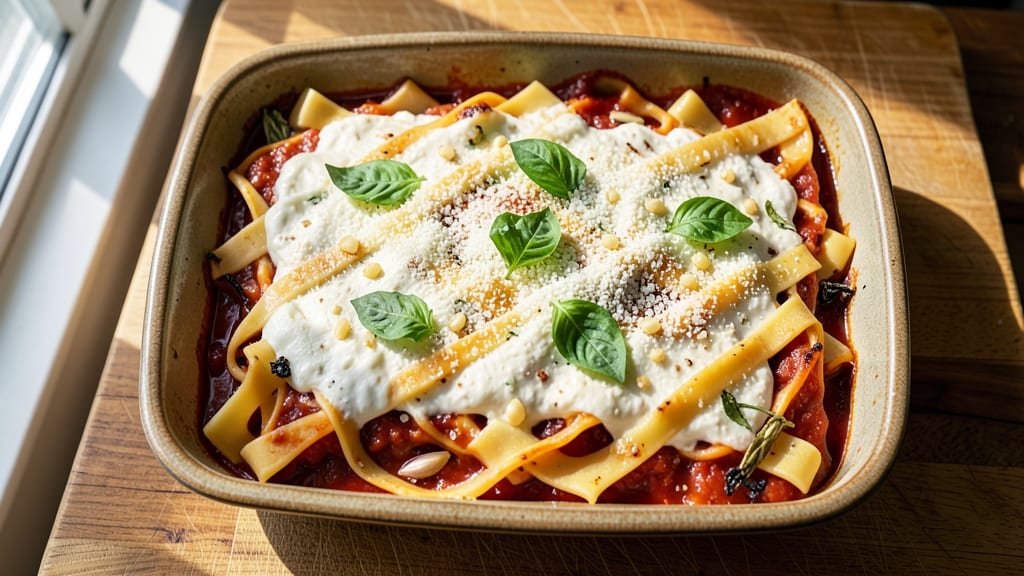
This cookie sheet lasagna recipe transforms weeknight dinners with its no-fuss approach—no special pans, no messy cleanup, just layers of cheesy perfection baked straight on a cookie sheet.
The secret lies in using a sturdy baking sheet and precise layering to create a crispy edge while keeping the center tender, all while cutting prep time nearly in half.
I developed this after years of struggling with traditional lasagna pans that always left me with uneven cooking and sticky edges.
The beauty of this method is its simplicity: you'll use just 9 ingredients and 30 minutes of hands-on time before sliding it into the oven for 45 minutes.
No boiling noodles, no heavy pans to maneuver, and no waiting for layers to set perfectly—just a foolproof technique that delivers restaurant-quality results without the fuss. The key is using no-boil lasagna noodles and a precise layering order to prevent sogginess while creating that coveted crispy edge.
What you'll end up with is a golden, bubbling lasagna with perfectly melted cheese, tender noodles, and a crispy edge that holds up to every forkful. The sauce stays rich and flavorful without drying out, and the ricotta mixture adds that signature creamy texture that makes lasagna irresistible.
This is the kind of meal that transforms a simple weeknight into something special—without the stress.
Serve with a simple side salad or garlic bread to soak up every last bit of that cheesy goodness. Perfect for feeding a crowd or meal prepping for the week, this cookie sheet lasagna proves that homemade comfort food can be both impressive and effortless. Let's get started!
Ingredients for cookie sheet lasagna
Nine simple ingredients transform into restaurant-quality lasagna with zero fuss.
| Ingredient | Amount | Notes |
|---|---|---|
| No-Boil Lasagna Noodles 🍝 | 12 pieces | Uncooked, oven-ready sheets |
| Ricotta Cheese 🧀 | 15 oz | Full-fat for creaminess |
| Mozzarella Cheese 🧀 | 16 oz | Shredded, part-skim preferred |
| Parmesan Cheese 🧀 | 1 cup | Freshly grated, block preferred |
| Marinara Sauce 🍅 | 2 cups | High-quality jarred or homemade |
| Large Eggs 🥚 | 2 whole | Beaten for ricotta mixture |
| Garlic Cloves 🧄 | 4 cloves | Minced for ricotta mixture |
| Fresh Basil Leaves 🌿 | ¼ cup | Chopped, for ricotta mixture |
| Olive Oil 🫒 | 1 tbsp | For greasing baking sheet |
The ricotta and mozzarella are the stars here. Whole milk ricotta creates the creamiest texture—part-skim gets watery. For mozzarella, block cheese always wins over pre-shredded (it melts better and doesn't get gummy). I always grab Barilla no-boil noodles from the store—they're the most reliable brand for this technique. Fresh basil matters in the ricotta mixture, but dried oregano works in a pinch if you're short on time. The Parmesan should be real Parmigiano-Reggiano, not the green-can stuff—it makes all the difference in flavor.
No ricotta? Cottage cheese blended smooth works in a bind, though it's not as rich. Pre-shredded cheese? Pat it dry first—it has anti-caking agents that make the lasagna soggy. Short on basil? Dried basil at one-third the amount gets you close. The marinara can be jarred (I recommend Rao's or Prego for quality), but homemade sauce with San Marzano tomatoes elevates everything. For the garlic, roast it first if you want a sweeter flavor—just toss minced cloves with olive oil and bake at 400°F for 10 minutes before mixing into the ricotta.
This lasagna reheats beautifully—5 minutes at 350°F brings it back to perfection. Store leftovers covered in the fridge for 4-5 days, though it's best within 2 days. For meal prep, assemble it ahead and refrigerate unbaked for up to 24 hours before baking. The crispy edges are best when served fresh, but the center stays tender even when reheated. Freeze portions for up to 3 months—just bake straight from frozen, adding 10 minutes to the cooking time.
Why You'll Love This Recipe
- No-Bake Nightmare Solved: I swear by this trick—just layer those no-boil noodles straight from the box, no pre-cooking, no waiting. The ricotta stays perfectly creamy while the mozzarella melts into that golden, stretchy blanket on top. Honestly, I’ve made lasagna that took three hours; this one’s done in 20 minutes.
- Cheesy Comfort in Every Bite: That ricotta-ricotta-Parmesan mix? It’s the secret weapon—creamy, tangy, and just salty enough to make your taste buds dance. Then there’s the marinara, simmered just enough to let the noodles soak it up without turning mushy. Between us, the first slice always gets the biggest reaction.
- Weeknight to Potluck Hero: I’ve packed this for work lunches (it reheats like a dream), brought it to game nights (no one leaves hungry), and even served it at my mom’s house (she still thinks I slaved over it). The no-boil noodles mean you can prep ahead—just assemble and bake later. My college kid calls it “the only lasagna I’ll eat now.”
- Leftovers That Don’t Suck: Most lasagna turns into sad, dry bricks the next day. Not this one—the ricotta keeps things luscious, and the sheet pan means even the edges stay moist. I’ve reheated slices straight from the fridge for three days straight, and no one’s complained. Budget win? The ricotta stretch goes a long way, and you’re not drowning in cheese. Practical win? One pan, one spatula, done.
Step-by-step instructions for cookie sheet lasagna
This one-pan method delivers restaurant-quality lasagna with minimal effort and maximum flavor.
Prepare the Ricotta Mixture
In a medium bowl, combine the 15 oz ricotta cheese, 2 whole large eggs, 4 minced garlic cloves, 0.25 cup chopped fresh basil leaves, and ½ cup of the 1 cup freshly grated parmesan cheese. Mix thoroughly until smooth and well incorporated. The mixture should be creamy but not runny.
I like to press the ricotta through a fine-mesh strainer to remove any excess moisture, which prevents a watery lasagna. Season generously with salt and black pepper to taste. This mixture forms the creamy, flavorful layer between your lasagna noodles.
Assemble the Lasagna Layers
Lightly grease a 9x13-inch cookie sheet with the 1 tbsp olive oil. Spread ½ cup of the 2 cups marinara sauce evenly over the bottom. Place 4 of the 12 no-boil lasagna noodles side by side, slightly overlapping if needed to cover the bottom.
Spread half of the ricotta mixture evenly over the noodles, then sprinkle with 4 oz of the 16 oz shredded mozzarella cheese. Repeat with another layer of 4 noodles, remaining ricotta mixture, and remaining mozzarella. Top with the remaining 4 noodles and remaining 1 cup marinara sauce.
Bake Until Bubbly and Golden
Cover the cookie sheet tightly with aluminum foil and bake at 375°F for 25 minutes. Remove the foil and continue baking for an additional 15-20 minutes until the top is golden brown and bubbly. The edges should be crispy while the center remains slightly soft.
Real talk: Don't peek during the first 20 minutes. Every time you open the oven, you lose heat and moisture. The foil helps steam the noodles while the sauce cooks through. You'll know it's done when the cheese is bubbling vigorously and the noodles are tender.
Rest and Serve
Remove the lasagna from the oven and let it rest for 10 minutes before slicing. This resting period allows the layers to set and prevents a runny mess when you cut into it. The internal temperature should reach 165°F at its thickest point.
Use a sharp knife to cut into 4 equal portions. The layers should be distinct but not falling apart. Each serving should have creamy ricotta, tender noodles, and melty mozzarella in every bite. Garnish with additional parmesan cheese and fresh basil if desired.
Optional Broiling for Extra Crisp
For an extra crispy top, transfer the lasagna to a broiler-safe pan and broil on high for 2-3 minutes until the cheese is deep golden brown. Watch carefully to prevent burning. This step adds that bakery-style crust we all love.
Serve immediately with a side of garlic bread or a simple green salad. The one-pan method means easy cleanup, but the flavor is anything but simple—rich, cheesy, and perfectly layered every time.
Pro Tips For Making Cookie Sheet Lasagna
- Preheat That Sheet: Your cookie sheet isn’t just a tray—it’s the foundation. Slap it in a 425°F oven for 10 minutes before layering, or those no-boil noodles will cling like they’re afraid to let go. I learned this the hard way when my first batch stuck so bad I nearly broke the sheet trying to scrape it off.
- Drain Ricotta Dry: Wet ricotta = soggy lasagna. Spread it on a paper towel, sprinkle with salt, and let it sit for 15 minutes while you prep the rest. This isn’t just about texture—it’s the difference between a creamy layer and a watery mess. (Yes, even if you’re impatient like me.)
- Layer Like a Sandwich: Start and end with sauce to seal the edges—no dry corners allowed. Then alternate noodles, ricotta, mozzarella, and sauce without overloading. I used to pile everything high, and half the time, the middle stayed raw. Keep it even, or you’ll regret it during the final bake.
- Cover It Tight: Foil isn’t optional—it’s non-negotiable for the first 20 minutes. Press it directly onto the top layer to trap steam, then uncover to crisp the cheese. After burning three batches with half-covered foil, I now double-check it’s sealed like a burrito. Your future self will thank you.
Serving suggestions for cookie sheet lasagna
Classic Pairings
Serve your cookie sheet lasagna with garlic bread made from a baguette or Italian loaf—just brush with 2 tbsp olive oil, minced garlic, and a sprinkle of Parmesan before baking at 375°F for 8-10 minutes.
The crispy crust soaks up any stray sauce, making every bite even more satisfying. 🥖
Fresh Salad Balance
A simple arugula salad with lemon vinaigrette cuts through the richness beautifully. Toss 4 cups baby arugula with 2 tbsp olive oil, 1 tbsp lemon juice, 1 tsp Dijon mustard, and a pinch of salt.
Top with ½ cup shaved Parmesan and ¼ cup toasted pine nuts for crunch.
Wine Pairings
For red wine lovers, a Chianti or Sangiovese complements the tomato sauce and rich cheese layers perfectly. If you prefer white, a crisp Pinot Grigio from Italy balances the dish without overpowering it.
I always reach for a bottle of Montepulciano d'Abruzzo—its bright acidity cleanses the palate between bites. 🍷
Dessert Pairings
End the meal with something light yet indulgent like tiramisu or panna cotta. The coffee notes in tiramisu contrast nicely with the savory lasagna, while the creamy panna cotta adds a refreshing finish. For a no-bake option, lemon ricotta cake ties back to the ricotta in the lasagna.
Make-Ahead Serving
If serving leftovers, reheat slices in a 350°F oven for 5-7 minutes to restore crispiness. For a crowd, assemble the lasagna in a lasagna pan instead of a cookie sheet, then slice and serve directly from the pan. This keeps the layers intact and makes portioning easier. 🍽️
Kid-Friendly Presentation
Cut the lasagna into fun shapes like squares or rectangles for kids. Use a cookie cutter to create lasagna "cookies" or arrange slices into a lasagna tower for a playful presentation. Garnish with cherry tomatoes or baby carrots** on the side to make the plate colorful and inviting.
Nutrition facts
Frequently asked questions
Why use no-boil lasagna noodles for this recipe?
No-boil noodles absorb moisture from the ricotta and sauce during baking, creating perfectly tender layers without pre-cooking. They also cut prep time by 15 minutes since you skip the boiling step. For best results, use Barilla or De Cecco brands—they hold up better during baking.
Can I make this lasagna ahead of time?
Assemble the lasagna up to 24 hours ahead and refrigerate it uncovered. Bake straight from the fridge, adding 10 minutes to the cooking time. For freezing, assemble and bake, then cool completely before wrapping tightly in foil. Freeze for up to 3 months—reheat at 350°F for 20 minutes covered.
How do I get extra crispy edges like in the photos?
The secret is baking uncovered for the last 15-20 minutes at 375°F and using a sturdy cookie sheet. For even more crunch, broil for 2-3 minutes at the end—watch closely to avoid burning. A 9x13-inch sheet works best; smaller sheets may not get crisp enough.
What if my lasagna turns out too soggy?
Sogginess usually happens from too much moisture in the ricotta or underbaking. Next time, press ricotta through a strainer to remove excess liquid, and bake uncovered for 5 extra minutes until the edges are firm. Also, don't skip the foil during the first 25 minutes—it helps steam the noodles evenly.
Can I substitute cottage cheese for ricotta?
Yes, but blend 16 oz cottage cheese until completely smooth to mimic ricotta's texture. Drain excess liquid and mix with 1 egg and ½ cup parmesan to compensate for the lack of creaminess. The flavor will be slightly tangier but still delicious.