
Desserts
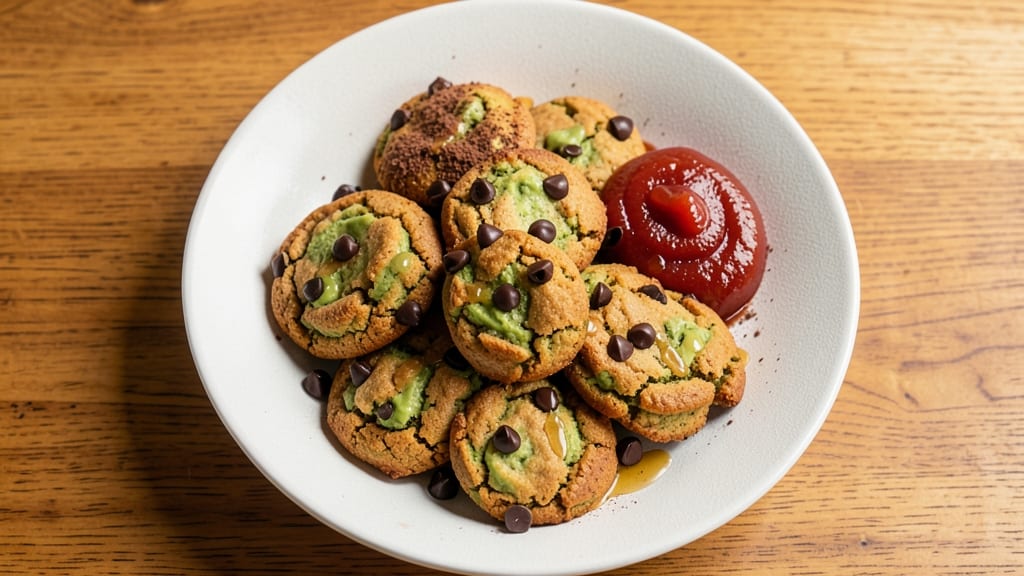
This avocado cookies recipe transforms a humble kitchen staple into decadent chocolate treats—no guacamole vibes, just rich, fudgy texture and deep cocoa flavor.
The secret lies in using ripe avocado as a fat substitute, creating cookies that are moist, tender, and packed with chocolatey depth without tasting like a health food experiment.
After years of baking tests (and eating test batches), I perfected this method to deliver cookies that look and taste like they came from a specialty bakery.
The beauty of this recipe is its simplicity: just 5 key ingredients come together in a single bowl, then bake at 350°F for 12-14 minutes to achieve that perfect balance of crisp edges and soft centers.
The avocado not only replaces butter but also adds natural moisture, while cocoa powder and dark chocolate ensure every bite delivers that satisfying chocolate fix. Unlike traditional cookies, these hold their shape beautifully and develop a subtle caramelized flavor as they cool.
What makes these cookies truly special is their versatility—drizzle with melted chocolate, sprinkle with flaky sea salt for contrast, or keep them classic with a dusting of powdered sugar. They're vegan-friendly without sacrificing richness, and the flavor improves slightly as they sit, making them perfect for baking ahead.
The texture is what truly sets them apart: dense yet crumbly, with pockets of melted chocolate that make them impossible to resist.
Whether you're looking for a healthier treat that still satisfies chocolate cravings or a foolproof recipe for vegan gatherings, these avocado cookies deliver. The method is straightforward, the ingredients are simple, and the results are consistently impressive. Let's get baking—your taste buds (and your guests) will thank you.
Ingredients for avocado cookies
Five core ingredients transform avocado into decadent chocolate cookies with bakery-style texture.
| Ingredient | Amount | Notes |
|---|---|---|
| Ripe Avocados 🥑 | 2 whole | Firm but yielding when pressed |
| Unsweetened Applesauce 🍏 | ½ cup | Unseasoned, unsweetened variety |
| Granulated Cane Sugar 🍚 | ½ cup | Or coconut sugar for refined option |
| Unsweetened Cocoa Powder 🍫 | ½ cup | Natural, not Dutch-processed |
| Dark Chocolate Chips 🍫 | 1 cup | 70% cacao minimum, vegan |
| Vanilla Extract 🌿 | 1 tbsp | Pure Madagascar bourbon |
| Baking Soda 🧪 | ½ tsp | Pure, aluminum-free |
| Diamond Crystal Kosher Salt 🧂 | ½ tsp | Fine grain preferred |
| All-Purpose Flour 🌾 | 1 ½ cups | White or whole wheat blend |
| Flaxseed Meal 🌾 | 1 tbsp | Ground fresh for binding |
| Cold Water 💧 | 3 tbsp | For flax egg activation |
| Powdered Sugar 🍚 | ¼ cup | For dusting, optional |
The avocados are non-negotiable—Hass variety at ripe but firm stage yields optimal fat content. Whole Foods or Trader Joe's consistently carry perfectly ripe specimens; avoid bruised spots. For the cocoa powder, Valrhona or Guittard brands deliver superior depth, but Ghirardelli Natural Cocoa from grocery stores works admirably. The dark chocolate chips should contain at least 70% cacao—Enjoy Life brand offers excellent vegan options. Pre-grind the flaxseed meal yourself for maximum binding efficiency, or use pre-ground from the bulk section. The baking soda must be fresh; if it smells vinegary, replace it immediately.
No applesauce? Mashed banana or pumpkin puree works at equal volume, though flavor profile shifts slightly. Substitute coconut sugar with maple syrup reduced to equal volume, but reduce other liquids by 1 tbsp to maintain texture. For the chocolate, chopped vegan chocolate bars create more pronounced pockets. The vanilla extract should be pure bourbon or Madagascar—imitation extracts contain synthetic compounds that alter flavor. If you must use Dutch-processed cocoa powder, reduce the baking soda to 0.25 tsp to prevent bitterness. For gluten-free adaptation, replace flour with a 1:1 gluten-free blend, but expect slightly denser texture.
Store baked cookies in an airtight container with parchment paper layers between batches to maintain crispness. They remain fresh for 5-7 days at room temperature or 2 weeks refrigerated. For longer storage, freeze on a parchment-lined tray for 2 hours, then transfer to a sealed bag for up to 3 months. Reheat individual cookies at 300°F for 3-4 minutes to restore freshness. The flavor actually improves after 24 hours as the avocado's natural oils meld with the chocolate. Portion into single-serving bags for perfect individual treats.
Why You'll Love This Recipe
- No-Fuss Mix-In: I swear by the avocado trick—mashed ripe fruit replaces oil, so no measuring, no waiting for melted butter. Just scoop, blend, and fold. That applesauce keeps it moist without the greasy aftertaste I hate in other recipes.
- Rich Chocolate Twist: The cocoa powder gives these a deep, almost fudgy base, but the avocado keeps them from being dense. Add those dark chocolate chips? They melt into pockets of gooey perfection—like a cookie and brownie had a baby.
- Snack Attack Ready: I keep a batch in the fridge for when I need something sweet but don’t want to turn on the oven. They hold up for days (yes, even after I’ve eaten half the batch in one sitting) and taste just as good cold as warm.
- Budget Bright Spot: Avocados are cheap when they’re ripe, and a little goes a long way. No fancy ingredients here—just pantry staples that won’t break the bank. Honestly, it’s my go-to when I’m craving something indulgent but don’t want to splurge.
Step-by-step instructions for avocado cookies recipe
Here's the method for creating rich, fudgy avocado cookies with a perfect chocolate flavor profile.
Prepare the Flax Egg and Avocado Base
In a small bowl, combine the 1 tablespoon flaxseed meal with the 3 tablespoons cold water. Stir vigorously and let it sit for 5 minutes until it thickens into a gel-like consistency resembling an egg. This flax egg acts as the binder in our recipe, replacing traditional eggs while maintaining structure.
Meanwhile, in a separate large bowl, use a fork to mash the 2 whole ripe avocados until completely smooth. Add the 0.5 cup unsweetened applesauce, 0.5 cup granulated cane sugar, 1 tablespoon vanilla extract, and mix thoroughly. The avocado provides natural fat that creates that signature tender texture we're after—no greasy aftertaste, just rich mouthfeel. The applesauce helps balance the density while keeping the cookies moist.
Combine Dry Ingredients and Fold in Chocolate
In a medium bowl, whisk together the 1.5 cups all-purpose flour, 0.5 cup unsweetened cocoa powder, 0.5 teaspoon baking soda, and 0.5 teaspoon diamond crystal kosher salt. Sift the mixture once to eliminate any lumps—this ensures even distribution throughout the batter and prevents dense pockets in your cookies.
Gradually add the dry ingredients to the avocado mixture, stirring gently with a silicone spatula just until combined. Avoid overmixing at this stage—you should still see some flour streaks. Once incorporated, fold in the 1 cup dark chocolate chips using a gentle folding motion. The chocolate should be evenly distributed but still visible as distinct pockets throughout the dough.
Chill the Dough for Optimal Texture
Cover the prepared dough with plastic wrap and refrigerate for at least 30 minutes, preferably up to 2 hours. This chilling step is crucial—it allows the flour to fully hydrate and prevents excessive spreading when the cookies hit the oven. The cold dough also helps maintain the avocado's natural oils in suspension, preventing any separation during baking.
While the dough chills, preheat your oven to 350°F and line two baking sheets with parchment paper. The 350°F temperature is ideal for achieving that perfect balance between crisp edges and soft centers. If your oven runs hot, you might need to reduce to 325°F for even baking.
Shape and Bake the Cookies
Using a cookie scoop or tablespoon, portion the chilled dough into 1-tablespoon sized balls and place them 2 inches apart on the prepared baking sheets. Gently flatten each ball slightly with your palm—this creates the classic cookie shape while ensuring even baking. The dough should hold its shape without sticking to your fingers.
Bake the cookies for 12-14 minutes until the edges are set but the centers still appear slightly underdone. You'll know they're ready when the edges are deep golden brown and the tops have developed a crackly texture. The centers should pull away from the edges slightly when gently pressed. Rotate the baking sheets halfway through for even browning.
Cool and Finish with Powdered Sugar
Remove the cookies from the oven and let them cool on the baking sheets for 5 minutes before transferring to a wire rack. This brief resting period allows them to set slightly while preventing the delicate centers from overcooking. The cookies will continue to firm up as they cool, developing that perfect balance of texture.
Once completely cooled, dust the tops with the 0.25 cup powdered sugar using a fine-mesh sieve. This final step adds a delicate sweetness that complements the rich chocolate flavor. Store any leftovers in an airtight container for up to 5 days, though I doubt they'll last that long—they're far too tempting to resist.
Pro Tips For Making Avocado Cookies
- Mash Avocados Roughly: Skip the food processor—hand-mashing with a fork leaves just enough texture to bind the dough without turning it into avocado puree. I used to over-blend, and the cookies ended up dense and greasy. Two minutes with a fork is enough.
- Chill the Dough: Stash the dough in the fridge for at least 30 minutes before baking—this prevents the applesauce from making your cookies spread into sad, flat pancakes. (Yes, I’ve seen it happen.)
- Use Cold Chocolate Chips: Pull the chocolate chips from the fridge right before folding them in, or they’ll melt into the dough and turn your cookies into a single, gooey blob. Trust me, your future self will thank you when they’re still holding their shape.
- Underbake Slightly: These cookies are delicate—pull them when the edges are set but the centers still look just underdone. They’ll firm up as they cool. Overbaking turns them into hockey pucks.
Troubleshooting perfect results
Dough Too Sticky
If your dough feels excessively sticky after mixing, it’s likely because the avocados were too ripe or the applesauce added extra moisture. To fix this, chill the dough for an additional 30-60 minutes—this helps the flour absorb excess liquid.
If the dough is still unmanageable, add 1-2 tablespoons more flour (1 tbsp at a time) until it holds its shape when pressed. Over-chilling can make the dough too firm, so aim for 2 hours max in the fridge. 💫
Cookies Spread Too Much
Excessive spreading usually happens when the dough isn’t chilled long enough or the oven runs hot. First, ensure you’re baking at 350°F—if your oven runs hot, reduce to 325°F. Also, flatten the dough balls slightly more before baking to create a thicker base that resists spreading.
For extra insurance, place the baking sheets on the middle rack where heat is most even. 🌡️
Dry or Crumbly Texture
Dry cookies often result from overbaking or using too much flour. Pull them from the oven as soon as the edges are set (around 12 minutes)—they’ll continue cooking on the baking sheet.
If the dough was too dry before baking, add 1-2 teaspoons of cold water or unsweetened applesauce to the mixture. For a richer texture, ensure your avocados are ripe but not overripe (they should yield slightly to gentle pressure).
Chocolate Sinks to Bottom
This happens when the dough isn’t cold enough before baking, causing the chocolate to melt too quickly. Always chill the dough for the full 30-60 minutes before scooping.
For extra stability, fold in the chocolate chips just before baking or use slightly larger chips (½-inch pieces) that hold their shape better. If the issue persists, try folding in ¼ cup chopped nuts (like walnuts) to weigh down the chocolate. 🍫
Cookies Taste Bland
If your cookies lack depth, it’s likely due to underripe avocados or weak cocoa powder. Use Hass avocados that are ripe but not mushy—they should have a slight give when pressed.
For richer flavor, upgrade to high-quality cocoa powder (like Valrhona or Guittard) and add a pinch of espresso powder (½ tsp) to enhance the chocolate notes. A splash of almond extract (¼ tsp) also adds complexity without overpowering. 💡
Dough Separates in Oven
Avocado dough can separate if overmixed or if the avocado wasn’t mashed smooth enough. Start by ensuring your avocados are completely mashed with no lumps—use a fork or a food processor for a silky texture. Avoid overmixing after adding the dry ingredients; stir just until combined.
If separation still occurs, fold in an extra ½ cup of chocolate chips to bind the mixture better. Also, bake at the lower end of the 350°F range (340°F) to slow the cooking process. ⚡
Nutrition facts
Frequently asked questions
Why do these cookies use avocado instead of butter?
Avocado replaces butter by providing healthy fats and natural moisture without adding greasiness. The creamy texture creates tender cookies with a rich mouthfeel, while the low saturated fat content makes them a lighter alternative. Plus, it eliminates that classic "buttery" aftertaste you sometimes get in vegan baking.
Can I make these without applesauce?
Yes! Swap the applesauce for ½ cup mashed banana or pumpkin puree at equal volume. For a neutral flavor, use ¼ cup melted coconut oil plus ¼ cup water. Just remember that substitutions may slightly alter texture—banana adds sweetness while coconut oil makes cookies denser.
How do I know when the avocados are ripe enough?
Press gently—they should yield slightly to pressure but not feel mushy. Look for dark skin with some brown speckling (Hass variety). If they're too firm, they won't provide enough fat for rich texture. For best results, use avocados that are ripe but still hold their shape when sliced.
Can I add mix-ins like nuts or chips?
Fold in ½ cup chopped walnuts or extra chocolate chunks after mixing dry ingredients. For texture contrast, try toasted coconut flakes or sea salt crystals. Just be mindful not to overfill—keep portions to ¼ cup total per batch to maintain cookie structure.
Why do I need to chill the dough?
Chilling prevents excessive spreading by letting the flour absorb moisture and firm up the avocado's natural oils. It also helps the chocolate chips maintain shape during baking. Skip this step at your own risk—cookies may flatten dramatically and lose their perfect texture.